
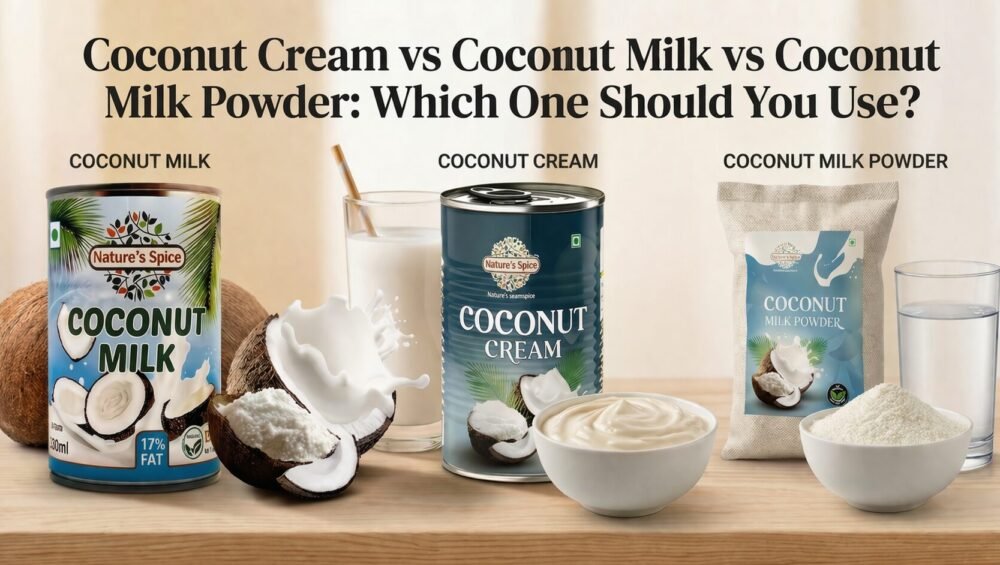
Coconut Cream vs Coconut Milk vs Coconut Milk Powder: Key Differences & Uses
You’re standing in the kitchen, recipe open, and it says coconut milk. But your pantry has coconut cream. And your cupboard has a bag of coconut milk powder. Which one do you reach for? This is where understanding coconut cream vs coconut milk vs powder becomes important.
If you’ve ever stood confused in a grocery aisle wondering what the difference is, you’re not alone. They look similar, come from the same fruit, and have names that sound interchangeable. However, when it comes to coconut cream vs coconut milk vs powder, their texture, fat content, and cooking uses are quite different.
In this guide, we break down what each product is, how they differ in fat content and texture, which dishes they work best in, and when you can substitute one for the other. By the end, you’ll never second-guess your coconut product again.
Difference between coconut cream vs coconut milk vs powder
- Coconut milk: thin, pourable, all-purpose — use it for curries, soups, and drinks
- Coconut cream: thick, rich, high-fat — use it for desserts, whipping, and extra-creamy gravies
- Coconut milk powder: dehydrated coconut milk — use it for convenience, travel, smoothies, and controlling thickness
What Exactly Is Each Product?
Coconut Milk
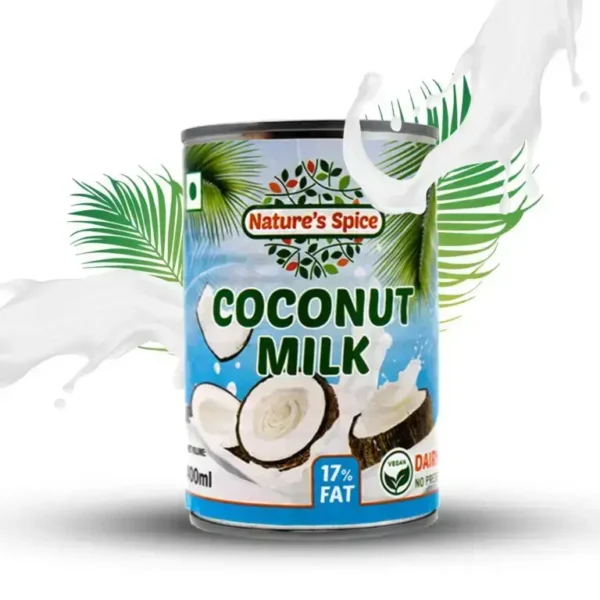
Coconut milk is made by blending grated coconut flesh with water and then straining out the solids. The result is a white, pourable liquid with a mild coconut flavour. It typically contains around 17% fat, which gives it enough richness for cooking but keeps it light enough to drink.
This is the most commonly used coconut product in Indian, Thai, and Southeast Asian cooking. It’s what you want in your Kerala fish curry, Thai green curry, or coconut rice.
→ Nature’s Spice Coconut Milk 400ml is made with no preservatives and no added thickeners, just pure coconut and water.
Coconut Cream
Coconut cream is essentially coconut milk with most of the water removed. It’s made the same way – blended and strained, but uses a higher ratio of coconut flesh to water. The result is a thick, spoonable product with 24–30% fat content.
Think of it the way you’d think of heavy cream vs whole milk. Coconut cream is richer, denser, and more indulgent. It’s what you want when a recipe calls for body and richness. Desserts, whipped toppings, and restaurant-style gravies where the sauce needs to coat the back of a spoon.
→ Left a can of Nature’s Spice Coconut Cream in the fridge overnight? The top layer solidifies into a thick cream you can whip like dairy cream.
Coconut Milk Powder
Coconut milk powder is spray-dried coconut milk — all the coconut goodness with zero water. You reconstitute it by mixing with warm water, and you control the final thickness based on how much powder you use.
It’s the most versatile and shelf-stable of the three. One bag can last 12+ months in your pantry without refrigeration, making it ideal for people who only occasionally cook with coconut, or who want to add coconut flavour to smoothies, oats, or baking without opening a full can.
→ Use 3 tbsp of Nature’s Spice Coconut Milk Powder per 200ml of warm water for standard coconut milk. Use 5 tbsp for a creamier consistency closer to coconut cream.
Side-by-Side Comparison: Coconut cream vs Coconut milk vs Coconut Milk Powder
| Feature | Coconut Milk | Coconut Cream | Coconut Milk Powder |
|---|---|---|---|
| Fat Content | ~17% | ~24–30% | ~65% (concentrated) |
| Texture | Light, pourable | Thick, spoonable | Adjustable (powder form) |
| Best Uses | Curries, soups | Desserts, gravies | Travel, smoothies |
| Shelf Life | 3–4 days (fridge) | 3–4 days (fridge) | 12+ months (sealed) |
| Interchange | Dilute for cream | Add water for milk | Flexible with adjustment |
When to Use Each One: Dish-by-Dish Guide
Coconut milk works best when…
- Making curries — it provides a light, flavorful base without being too rich
- Cooking soups and dals — blends smoothly and enhances the broth
- Preparing rice adds a fragrant, slightly sweet touch that pairs well with spicy dishes
- Mixing drinks — ideal for smoothies, golden milk, and iced coffees
- You want a lighter dish that still carries coconut flavor
Coconut cream is ideal when…
- Making desserts — perfect for payasam, kheer, coconut barfi, and puddings that need richness
- Finishing a curry — stir in at the end for a creamy, restaurant-style texture
- Whipping — chilled cream creates a dairy-free topping for pies and fruit bowls
- Preparing thick gravies — great for kormas, malai dishes, and butter chicken-style curries
- A recipe specifically calls for coconut cream — it shouldn’t be replaced with milk
The Coconut milk powder is useful when…
- You need only a small quantity without opening a full can
- Travelling or cooking without refrigeration
- Adding coconut flavor to smoothies, oats, protein shakes, or baked goods
- You want control over the thickness of the coconut mixture
- Stocking a long-lasting pantry staple
Can You Substitute One for the Other?
Yes, with some adjustments. Here’s how:
Substituting coconut cream for coconut milk
Mix 1 part coconut cream with 1 part water. This gives you a rough approximation of coconut milk. The result will be slightly richer than standard coconut milk, but it works well in curries and soups.
→ For best results, use a clean-label option like Nature’s Spice Coconut Cream, made without added thickeners.
Substituting coconut milk for coconut cream
This is harder. You can simmer coconut milk over low heat for 15–20 minutes until some water evaporates and it thickens, but it won’t get as rich as true coconut cream. For desserts, especially, coconut cream is worth using as-is.
→ If you’re making lighter curries or soups, Nature’s Spice Coconut Milk gives a balanced texture without overpowering the dish.
Substituting coconut milk powder for either
- For coconut milk: Mix 3 tbsp powder per 200ml warm water.
- For coconut cream: Mix 5–6 tbsp powder per 200ml warm water, or use less water for a thicker result.
The reconstituted powder works well in cooked dishes. For whipping, it won’t behave exactly like coconut cream; use the real cream for that.
→ Nature’s Spice Coconut Milk Powder is especially useful when you want flexibility and long shelf life without compromising on taste.
Which One Is Best for Indian Cooking?
Indian cooking uses all three, but in different ways:
- Coconut milk is the default for South Indian curries, Kerala dishes, and coastal recipes. It gives the right body without overpowering.
Pairs especially well with dishes made using Nature’s Spice turmeric, red chilli powder, and curry blends. - Coconut cream is used in North Indian-style restaurant gravies (like malai kofta or shahi paneer with a coconut twist), or to finish a curry with extra richness.
Works great alongside Nature’s Spice garam masala or chicken masala for deeper flavour. - Coconut milk powder is popular in instant cooking, travel cooking, and for adding a subtle coconut note to dals, chutneys, or smoothies without opening a full can.
You can even mix it into Nature’s Spice green mint tea or smoothies for a light coconut twist.
→ For a South Indian fish curry or a Goan prawn curry, always use coconut milk, not cream. The thinner consistency is intentional and part of the dish’s texture.
How to Store Each Product
Coconut milk (canned or fresh)
Once opened, transfer to an airtight glass container and refrigerate. Use within 3–4 days. Do not leave in the tin — the metal can affect the taste after opening.
Coconut cream (canned)
Same as coconut milk — refrigerate once opened and use within 3–4 days. For whipping, refrigerate the unopened can overnight and scoop out only the hardened top layer.
Coconut milk powder
Store in a cool, dry place away from moisture. Once opened, seal the bag tightly or transfer to an airtight container. It can last 12+ months unopened and 2–3 months once opened if kept dry.
Are They Equally Healthy?
All three products are naturally dairy-free, gluten-free, and vegan. They contain medium-chain triglycerides (MCTs) — a type of healthy fat that the body metabolises for energy more quickly than other fats.
The difference is in the fat and calorie content:
- Coconut milk: moderate fat (~17%), good for everyday cooking
- Coconut cream: high fat (~24–30%), use in smaller amounts
- Coconut milk powder: concentrated — calorie and fat content depends on how much you use
All three are free from preservatives, artificial flavours, and additives in Nature’s Spice products. They’re as close to fresh coconut as you can get in a shelf-stable format.
Frequently Asked Questions
1. Is coconut cream the same as cream of coconut?
No. Cream of coconut (like Coco Lopez) is sweetened and used in cocktails and desserts. Coconut cream is unsweetened and used in cooking. They are not interchangeable.
2. Can I use coconut milk powder in tea?
Yes. It dissolves easily in hot liquids and works very well as a dairy-free milk alternative in chai or coffee. Start with 1–2 tsp per cup and adjust to taste.
3. Why does my coconut milk separate in the curry?
This is normal and doesn’t mean it has gone bad. Coconut milk separates into cream (fat) and water when heated. Stir it back together. To prevent it, add coconut milk towards the end of cooking over low heat, and avoid boiling it rapidly.
4. Which coconut product is best for weight loss?
Coconut milk powder in small amounts gives you the flavour with the most control over quantity. However, all three are calorie-dense because of their natural fat content. Use them as flavour enhancers rather than a primary ingredient if you are watching calories.
5. Can I freeze coconut milk or cream?
Yes. Pour into an ice cube tray, freeze, and transfer to a bag. The texture may change slightly after thawing, but it still works well in cooked dishes like curries and soups.
Shop Nature’s Spice Coconut Products
All Nature’s Spice coconut products are made with no preservatives, no artificial thickeners, and no additives — just pure coconut, the way it should be.
- Coconut Cream | 400ml — thick, rich, perfect for desserts and finishing curries
- Coconut Milk | 400ml — pourable, all-purpose, essential for South Indian and Thai cooking
- Coconut Milk Powder | 500gm — long shelf life, versatile, great for smoothies and travel cooking
- Coconut Milk Powder | 1kg — bulk pack for frequent use
Browse all coconut products: Milk and Cream Collection
Looking for recipe ideas? Check out our 5 Creamy Coconut Milk Recipes for inspiration.