
Most people know turmeric as the yellow spice used in dal. Far fewer know that the same jar sitting in their kitchen is also a skin brightener, a natural preservative, a digestive tonic, a wound healer, and one of the most researched anti-inflammatory compounds in modern science. Knowing how to use turmeric powder well — beyond a pinch in your curry — is one of the most practical wellness upgrades an Indian household can make.
This guide covers 12 distinct turmeric powder uses across cooking, drinks, skincare, and home remedies. Each one is grounded in either traditional Ayurvedic practice, published nutritional science, or both. And because the quality of your haldi determines how well any of these uses work, every method here is developed around Nature’s Spice Organic Turmeric Powder — cold-processed, certified organic, and free of fillers.
Before you begin: the one rule that applies to all turmeric uses
Curcumin — the active compound responsible for every turmeric powder benefit — is fat-soluble and has low bioavailability on its own. For any internal use, always combine turmeric with a fat source (ghee, coconut milk, full-fat curd, olive oil) and a pinch of black pepper. Piperine in black pepper increases curcumin absorption by up to 2,000% by slowing its breakdown in the gut. Skip this pairing, and you’ll get only a fraction of what turmeric can actually deliver. With it, even a small daily dose accumulates into a meaningful health habit over weeks.
Turmeric uses in cooking
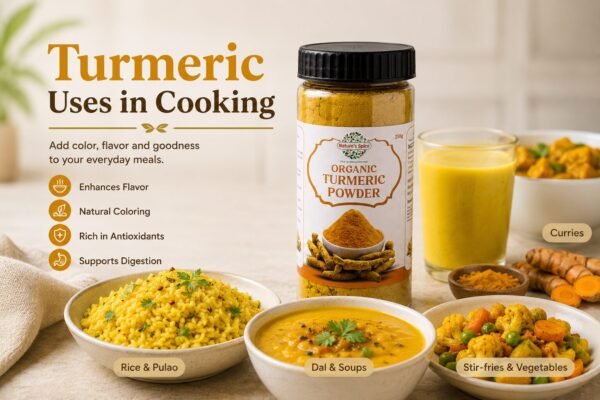
1. Dal and curries — the everyday foundation:
This is where most Indian households already use haldi, but the key is using enough of it. A quarter teaspoon per serving colours the dish, but it is the half teaspoon cooked in ghee at the beginning of tempering that delivers the most bioavailable curcumin. Cooking turmeric in fat is one of the most effective ways to use turmeric powder, because fat helps it absorb flavor from the very first step. How much to use: ½ tsp per pot, added to hot ghee before other spices.
2. Rice and khichdi:
Adding a pinch of turmeric to your rice water before cooking gives the grains a warm golden colour and a subtle earthy depth that pairs naturally with ghee and cumin. In khichdi, turmeric works alongside moong dal and ginger to create a dish that is genuinely therapeutic for digestion — one of its most traditional Ayurvedic uses. How much to use: ¼ tsp per cup of dry rice.
3. Scrambled eggs and paneer bhurji:
A quarter teaspoon of turmeric added with your regular spices while cooking eggs or paneer bhurji does not overpower the dish but adds warmth and delivers curcumin in one of its most bioavailable forms — cooked directly in fat at moderate heat. This is one of the simplest daily turmeric uses for people who want the benefits without a separate wellness routine. How much to use: ¼ tsp per 2 eggs or 100g paneer.
4. Roasted vegetables:
Toss cauliflower, sweet potato, broccoli, or pumpkin with olive oil or ghee and half a teaspoon of organic turmeric powder before roasting. The heat caramelises the curcumin compounds slightly, producing a sticky-golden coating on the vegetables and a warm depth of flavour that transforms an ordinary tray of vegetables into something genuinely interesting. This is one of the most popular modern turmeric powder uses in cooking for health-conscious households. How much to use: ½ tsp per tray, mixed into oil before coating.
5. Soups and broths:
A pinch of turmeric stirred into any vegetable or bone broth adds an immune-supporting layer to an already nourishing base. It works particularly well in tomato-based soups, lentil soups, and the classic Indian kadha — a spiced immunity broth made with ginger, tulsi, black pepper, and turmeric that has been used across Indian households as a monsoon remedy for generations. How much to use: ¼–½ tsp per litre of broth or soup.
Turmeric uses in drinks
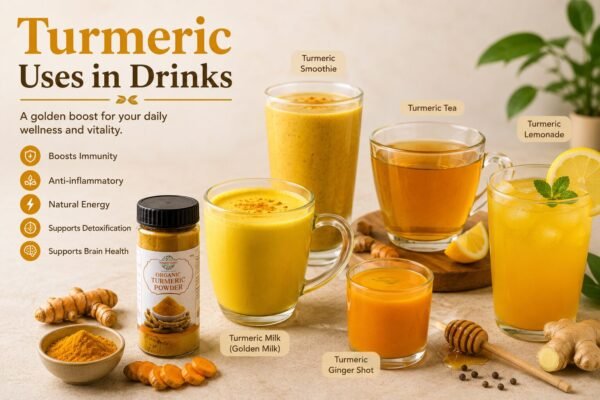
6. Haldi doodh (golden milk):
The most iconic of all turmeric powder uses — warm full-fat milk with half a teaspoon of turmeric, a crack of black pepper, cardamom, and jaggery. Consumed before bed, it supports immunity, reduces systemic inflammation, and aids sleep quality. The fat in full-fat milk helps curcumin absorption while you rest, making this the most efficient overnight wellness ritual an Indian household can build. How much to use: ½ tsp per glass.
7. Morning turmeric shot:
Warm water, half a teaspoon of organic turmeric powder, a squeeze of lemon, a pinch of black pepper, and raw honey. This is the dairy-free equivalent of haldi doodh and one of the best turmeric powder uses for immunity on an empty stomach. The lemon adds vitamin C, the honey soothes, and the black pepper ensures curcumin reaches the bloodstream. Two minutes to make and one of the most effective ways to start a monsoon morning. How much to use: ½ tsp per glass.
8. Turmeric lassi or curd drink:
Blend full-fat curd with a pinch of turmeric, roasted cumin, black salt, and a few mint leaves. The probiotics in the curd and the anti-inflammatory action of curcumin combine into a gut-health drink that is particularly effective during the monsoon when digestion slows, and water-borne infections are more common. This is one of the most underused turmeric powder uses in everyday Indian drinks. How much to use: ¼ tsp per glass.
“Turmeric is not one spice with one use. It is a daily system — for your food, your skin, your gut, and your immunity — built into a single pinch.”
Turmeric uses for skin
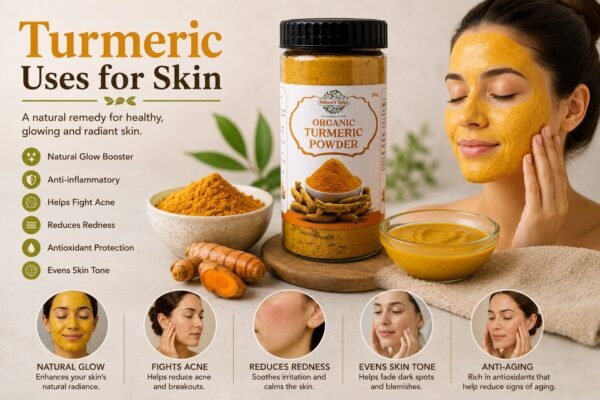
9. Brightening face pack:
Mix a quarter teaspoon of organic turmeric powder with two tablespoons of besan (gram flour) and enough rose water or raw honey to form a smooth paste. Apply evenly, leave for fifteen minutes, and rinse thoroughly. This is one of the oldest and most effective turmeric powder uses for glowing skin — the besan exfoliates gently while turmeric reduces redness, controls oiliness, and brightens pigmentation. Use once or twice a week. Always patch test first, and use certified organic turmeric to avoid chemical residues on skin. How much to use: ¼ tsp per application.
10. Acne and blemish spot treatment:
Mix a small pinch of turmeric with raw honey and apply directly to active blemishes for twenty minutes before rinsing. Turmeric’s antimicrobial and anti-inflammatory action reduces redness and bacterial activity at the surface level, making it one of the gentlest and most effective natural turmeric uses for acne-prone skin — particularly during monsoon when humidity drives up breakout frequency. How much to use: a very small pinch mixed with ½ tsp honey.
Turmeric uses in home remedies
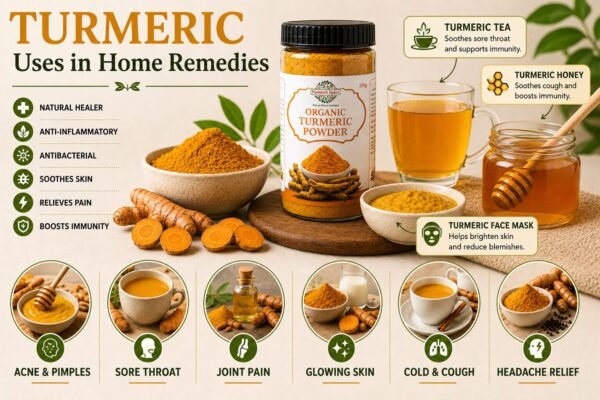
11. Immunity kadha for colds and throat infections:
Simmer water with fresh ginger, tulsi leaves, black pepper, a small cinnamon stick, and half a teaspoon of organic turmeric powder for ten minutes. Strain, add honey, and drink warm. This is the most traditional of all turmeric home remedy uses in India — a preparation that addresses the root causes of seasonal infection rather than masking symptoms. Particularly effective at the first sign of a sore throat or monsoon cold. How much to use: ½ tsp per cup of kadha.
12. Digestive tonic after heavy meals:
Stir a quarter teaspoon of turmeric into warm water with a pinch of rock salt and a squeeze of lemon immediately after a heavy or oily meal. Turmeric stimulates bile production, which aids fat digestion and reduces the bloating and discomfort that follow rich food. This is one of the most practical everyday turmeric uses in home remedies — quick, cheap, and effective within twenty to thirty minutes. How much to use: ¼ tsp per glass of warm water.
3 golden rules for every turmeric use
1. Fat and pepper — always. For every internal use of turmeric, fat and black pepper are not optional. They are what turn a flavour ingredient into an active health compound. Without this pairing, most curcumin passes through unabsorbed. This single rule separates a turmeric habit that works from one that does not.
2. Consistency over quantity. Half a teaspoon of organic turmeric powder daily for thirty days produces far more visible results than two teaspoons taken occasionally. Curcumin builds an anti-inflammatory baseline in the body over time. The question is never how much — it is whether you are doing it every single day.
3. Organic quality is non-negotiable for skin use. For topical applications, use only certified organic turmeric powder. Conventionally grown Haldi can carry pesticide residues that should never come into contact with your skin. For internal use, organic cold-processed turmeric retains full curcumin potency — the processing method is what determines the health benefit.
Frequently Asked Questions
Q1: What are the different ways to use turmeric powder daily?
Turmeric powder can be used in cooking (dal, rice, curries, roasted vegetables), in drinks (haldi doodh, morning shots, lassi), in skincare (face packs, spot treatments), and in home remedies (kadha, digestive tonic). The most practical approach is to build two to three of these into existing habits — cooking with it daily, drinking haldi doodh at night, and using a face pack weekly — rather than trying all twelve uses at once.
Q2: Can turmeric powder be applied directly to the face?
Yes, but always diluted — never on its own directly. Mix it with besan, honey, curd, or rose water before applying. Always patch test before full application and use only certified organic turmeric powder on skin to avoid chemical residues. Rinse thoroughly to avoid temporary staining on fair skin.
Q3: What is the best turmeric powder to use for monsoon specifically?
The most effective combination for monsoon is: haldi doodh before bed for immunity and sleep, a morning turmeric shot for daily immune support, turmeric in your regular cooking for consistent curcumin intake, and a weekly turmeric face pack for monsoon skin. Together, these four cover immunity, digestion, inflammation, and skin — the four areas the monsoon stresses most.
Q4: How is organic turmeric powder different for cooking versus regular turmeric?
Organic turmeric powder is grown without synthetic pesticides and is not irradiated — a process that degrades curcumin content and volatile oils. In cooking, this means more flavour and more active compounds per pinch. Cold-processed organic turmeric also has a noticeably fresher, earthier aroma than commercial powder that has been sitting in bulk storage. The difference is immediately apparent when you open the pack.
Q5: Where can I buy the best organic turmeric powder in India?
Nature’s Spice Organic Turmeric Powder is available at natures-spice.com with free shipping across India. Cold-processed from whole certified organic rhizomes, no fillers, no anti-caking agents, available in 100 g and 250 g packs. Every batch is packed fresh — not sourced from bulk commodity inventory.
Why Nature’s Spice is the right turmeric for every use
Every turmeric powder used in this guide only works as well as the Haldi you start with. Most commercial turmeric is irradiated for shelf stability — a process that reduces the volatile oils and curcumin levels on which these benefits depend. Many brands also bulk their powder with fillers that dilute the active compound without appearing on the label. The result is a product that colours your food but delivers little of the health value you are looking for.
Nature’s Spice Organic Turmeric Powder is cold-processed from hand-selected whole rhizomes grown without synthetic chemicals. No fillers, no anti-caking agents, no artificial additives. Certified organic and packed fresh. Whether you are cooking with it daily, applying it to your skin, or building an immunity routine for monsoon, the right turmeric makes every single use more effective — and you notice it from the first week.
Nature’s Spice Organic Turmeric Powder – 100% organic · cold-processed · no fillers · 250gm available
Also from Nature’s Spice
- Organic Garam Masala — warm spice blend for curries and slow-cooked dishes
- Organic Ginger Powder — warming, gut-friendly, anti-nausea for monsoon
- Organic Black Pepper — piperine source that amplifies curcumin absorption
- Organic Cumin Seeds — the digestive backbone of every Indian kitchen
- Organic Coriander Cumin Powder — earthy, aromatic, anti-inflammatory daily spice