Honey Benefits: 12 Health Reasons to Eat Raw Honey Daily
Honey is one of the few foods that have stayed in kitchens and home remedies for thousands of years without needing a rebrand. Ayurveda uses it, grandmothers swear by it for a cough, and modern nutrition research keeps circling back to confirm what traditional use already knew. But not every jar labelled “honey” delivers the same benefits — how it’s processed changes what actually reaches your body.
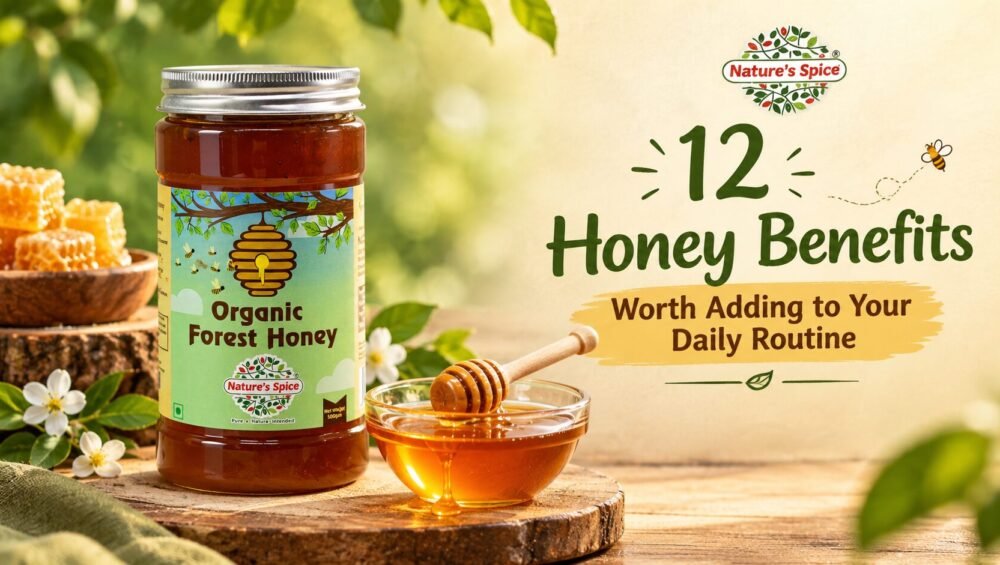
Walk into any kitchen in India, and you’ll likely find a jar of Organic forest honey tucked next to the tea and spices, used more as a household remedy than a dessert ingredient. That habit isn’t misplaced. Long before honey was sold as a wellness product, it was simply what people reached for when a cough started, when sugar felt too harsh, or when a wound needed a natural dressing.
This guide breaks down twelve honey benefits that hold up, how honey helps the skin specifically, how it compares to sugar and jaggery, simple ways to use it daily, and who should be more careful with it.
Why the Type of Honey Matters
Most of the benefits below apply specifically to raw, unprocessed honey — not the heavily filtered, heat-treated honey found in most supermarket bottles. Heating honey at high temperature to make it flow faster and look clearer also breaks down many of the enzymes and antioxidants that make it worth choosing over refined sugar in the first place.
The Golden Rule of raw honey: if it never sees temperatures above 40°C, it keeps its enzymes, pollen, and antioxidants intact. Add it after cooking, never during.
12 Honey Benefits Backed by Traditional and Nutritional Use
1. Supports Immunity
Raw honey contains natural antibacterial and antioxidant compounds that help the body’s defences, which is why it’s traditionally taken at the very first sign of a cold. A spoon in warm water each morning is a simple, low-effort habit rather than a cure, but it’s one worth keeping through the changing seasons.
2. Eases Cough and Sore Throat
Its thick texture coats and soothes the throat, and it’s one of the most common home remedies for a scratchy throat, often paired with warm water or ginger. This is also one of the few honey benefits with strong everyday backing — it’s frequently recommended over cough syrup for occasional throat irritation in adults and older children.
3. Aids Digestion
A small amount of raw honey on an empty stomach is a traditional aid for sluggish digestion, thanks to the natural enzymes it retains when unheated. Some people also find it gentler on the stomach than refined sugar when added to warm water first thing in the morning.
4. Provides Quick, Natural Energy
Honey is a mix of glucose and fructose that the body absorbs quickly, making it a better pre-workout or mid-afternoon pick-me-up than refined sugar. Unlike sugary drinks, it also carries trace minerals and antioxidants along with the quick energy.
5. Rich in Antioxidants
Multifloral honey, drawn from many different flowering plants, carries a broader range of antioxidant compounds than single-flower commercial honey. Darker honey generally carries a higher antioxidant load than lighter, more processed varieties.
6. Supports Gut Bacteria
Some of the natural sugars in raw honey act as a mild prebiotic, offering food for beneficial gut bacteria rather than just empty sweetness. Over time, this can support a more balanced gut environment when honey replaces refined sugar rather than adding to it.
7. A Gentler Everyday Sugar Substitute
Swapping refined white sugar for raw honey in tea, coffee, or cooking reduces processed sugar intake without giving up sweetness. Because honey is sweeter by volume than sugar, most people naturally use less of it once they switch.
8. Traditionally Used for Minor Wound Care
Honey’s natural antibacterial properties are why it has long been dabbed on minor cuts and burns in traditional practice — though it should never replace proper medical treatment for serious wounds or deep burns.
9. Naturally Anti-Inflammatory
Compounds in raw honey are associated with mild anti-inflammatory activity, adding to its traditional use for sore throats and minor irritation. This is part of why honey shows up so often in Ayurvedic formulations alongside herbs like tulsi and ginger.
10. Helps You Cut Down on Processed Additives
Genuine raw honey has one ingredient — honey. Choosing it over flavoured syrups or blended sweeteners is an easy way to simplify what’s on your plate, especially if you’re trying to reduce packaged sugar sources generally.
11. Long, Stable Shelf Life
Properly stored raw honey doesn’t spoil the way many other natural sweeteners do, so a single jar goes a long way without preservatives. Keep it sealed, away from direct sunlight, and it will comfortably outlast most other pantry staples.
12. Versatile Across the Kitchen
From lukewarm lemon water to a glaze on roasted vegetables, honey adjusts easily to both remedies and recipes, unlike more single-use sweeteners. It works in savoury marinades just as well as it does in a simple bowl of curd and fruit.
Honey vs Sugar vs Jaggery: How Do They Compare?
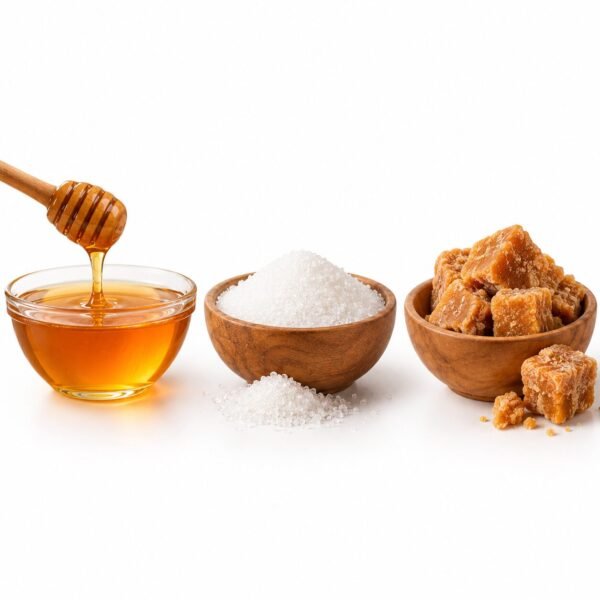
Refined white sugar: Offers sweetness with essentially no nutrients attached — no enzymes, no antioxidants, no trace minerals. It’s the most processed of the three.
Jaggery: Retains more minerals than refined sugar since it’s less processed, and is a common traditional swap, particularly around festive cooking.
Raw honey: Goes a step further when it’s genuinely unheated — it keeps live enzymes and a wider antioxidant profile than jaggery, though it should be used in similar moderation since it’s still a sugar.
Honey Benefits for Skin
Natural moisturiser: Honey is a humectant, meaning it draws in and holds moisture, which is why it appears in traditional homemade face masks.
Gentle on blemish-prone skin: Its natural antibacterial properties make it a common ingredient in DIY masks for occasional breakouts.
Soothing for dry patches: A thin layer left on for a few minutes can help soften rough, dry skin before rinsing off — patch-test first if your skin is sensitive.
How to Use Honey Every Day
- 1 teaspoon in lukewarm (not boiling) water first thing in the morning
- Stir it into Kashmiri kahwa tea or other Herbal Teas once it’s cooled slightly, so the honey isn’t heated
- Mixed with ginger powder for a home remedy during cough and cold season
- Drizzled over curd, oats, or fruit instead of refined sugar
- Whisked with a pinch of cardamom for a warm dessert glaze
- Stirred into warm (not hot) milk at bedtime as a traditional wind-down drink
- Add honey to your smoothie after blending stops, so friction doesn’t heat it.
- Spread thinly on toast or paratha in place of jam or refined-sugar spreads
- Whisked into a simple salad dressing with lemon juice and olive oil
- Used as a light glaze brushed over roasted sweet potato or grilled paneer, added after cooking
- Mixed with a pinch of black pepper and taken by the spoon for occasional throat irritation
- Applied as a thin layer on clean skin for 10–15 minutes as a simple hydrating face mask, then rinsed off
Who Should Be Careful With Honey
Infants under one year: Honey in any form should never be given to babies under 12 months due to the risk of infant botulism.
People managing blood sugar: Honey is still a form of sugar and affects blood glucose, so it should replace refined sugar rather than be added on top of it, and portions should stay modest.
Pollen allergies: Since honey contains trace pollen, people with certain pollen allergies should introduce it cautiously and check with a doctor if unsure.
Frequently Asked Questions
Q1. What is the best time to eat raw honey for benefits?
Many people prefer it first thing in the morning in lukewarm water, or at night in warm (not hot) milk or tea, but consistency matters more than the exact time.
Q2. Does forest honey go bad?
Properly stored raw honey has a very long shelf life. It may crystallise over time—that’s a natural sign of purity, not spoilage —and you can gently loosen it in warm water.
Q3. Is raw honey better than regular honey?
Yes, for most of the benefits above. Regular, heavily processed honey is heated and filtered, which reduces the enzymes and antioxidants found in raw, unprocessed honey.
Q4. Can I take honey with hot water?
Lukewarm water is better than hot water. High heat breaks down the natural enzymes that make raw honey worth choosing over sugar.
Q5. How much honey is safe to eat daily?
One to two teaspoons a day is a reasonable amount for most healthy adults as part of a balanced diet.
Q6. Is honey better than jaggery or sugar?
Raw, unheated honey generally retains more enzymes and antioxidants than refined sugar and slightly more than jaggery, but all three should be used in moderation since each is still a form of sugar.
Q7. Can honey help with seasonal throat irritation?
Many people use a spoon of raw honey in warm water or tea for occasional throat discomfort. It’s a supportive home remedy, not a substitute for medical care if symptoms are severe or persistent.
Pairs Well With
Start with a jar of Organic Forest Honey, raw and unprocessed, and build out a simple natural-remedies shelf alongside:
Organic Ginger Powder — for a honey-ginger remedy during cold season
Kashmiri Kahwa Tea — a natural, caffeine-free base for an evening cup with honey
Organic Cardamom Whole — for a warm, spiced honey drizzle over desserts