Saffron Benefits for Skin & Sleep: What Works and How to Use Kesar
Saffron benefits show up with just a pinch a day, as long as you use it properly. Here’s what it can do for your skin and sleep, and how to use it without wasting a single strand.
Saffron, or kesar, has been part of Indian kitchens and skincare routines for generations. Think of the bowl of kesar milk benefits before bed, or the saffron and turmeric face pack that someone in every family swears by. Around Navratri and Dussehra it shows up everywhere: kesar milk as prasad, kesari bhaat, phirni, and sweets finished with a few golden strands.
Saffron benefits are real, but they’re easy to miss. It’s the most expensive spice in the world by weight, so most people either use too little or use it the wrong way (usually by dropping it into boiling milk). This guide covers what saffron can do for skin and sleep, what the research does and doesn’t show yet, and how to soak, dose and store it properly.
Quick answer: Saffron benefits include better sleep quality, a more even skin tone and a calmer mood. The sleep evidence is the strongest, and it comes from small clinical trials. The skin evidence is thinner and mostly supports topical, traditional use. For one cup of kesar milk or one face pack, 5 to 10 strands is enough, added to warm (not boiling) liquid and steeped for 10 to 15 minutes.
How Has Saffron Been Used in India?
Saffron reached Kashmir through old trade routes and settled into royal kitchens, Ayurvedic medicine and temple rituals. Kesar tilak is applied during pujas, kesar milk is offered as prasad at Navratri, and saffron sweets turn up at everything from weddings to Diwali. For most Indian households it’s less an exotic import than a regular part of marking an occasion, which is why it carries so much meaning beyond its price.
So this Navratri and Dussehra, keep a cup of that kesar milk for yourself once the celebrations wind down. For a classic flavour, add one crushed pod of Organic Cardamom Whole while the milk warms. A small nightly ritual is how saffron benefits carry on well past the festive season.
What Is Saffron and Why Is It So Expensive?

Saffron is the dried stigma of the Crocus sativus flower. Each flower gives only three thin red stigmas, all picked by hand, and it takes around 150,000 flowers to make one kilogram. That labour is why real saffron is sold in grams, not in big packets. Iran grows most of the world’s saffron, while Kashmir is India’s best-known source, and Kashmiri saffron (which carries a GI tag) is prized for its deep colour and strong aroma.
Three compounds do most of the work. Crocin gives saffron its red-gold colour and most of its antioxidant activity. Safranal is behind the aroma and the calming effect on the nervous system. Picrocrocin gives the slightly bitter, honey-like taste. These are the compounds researchers point to in studies on skin and sleep.
Saffron Benefits for Skin: What the Research Says
Saffron may help even out skin tone and give a brighter look, but the evidence is early and results build slowly. It has been used in Indian and Persian beauty rituals for generations, usually as a face pack with milk, Organic Honey or besan, and modern research is only starting to catch up.
Helps even out skin tone. Saffron contains compounds that can slow tyrosinase, the enzyme behind excess melanin production. With consistent use, that’s linked to fewer dark spots and a more even complexion. Think weeks, not days.
Supports a natural glow. Its antioxidants help counter oxidative stress in skin cells, which is one reason regular use, either as a face pack or as kesar milk, is associated with fresher-looking skin.
May calm irritation and breakouts. Saffron has anti-inflammatory properties, which is why it’s traditionally used on acne-prone or irritated skin. It won’t replace a dermatologist’s routine for active acne, but it can be a gentle addition to one.
Traditional use in anti-aging routines. Face packs for fine lines and dullness often include saffron because of its antioxidant profile. One thing to know: a 2026 study that followed people taking saffron supplements for 12 weeks found real improvements in sleep and mood, but no significant change in objectively measured skin age. So the skin case is stronger for topical, traditional use than for supplements.
Our take: saffron is a supporting player for skin, not a miracle ingredient. Used once or twice a week as a face pack, or regularly as kesar milk, it’s a gentle, low-risk addition to your routine. It doesn’t replace sunscreen, hydration or a dermatologist’s advice for a diagnosed skin condition.
Saffron Benefits for Sleep: Does Kesar Milk Actually Work?

Kesar milk before bed has the best research support of any traditional saffron use. Small clinical trials link saffron to better sleep quality, though researchers still call the results promising rather than final.
Better sleep quality. In a randomized controlled trial of 55 adults with sleep complaints, people took 14 mg of saffron extract twice a day for four weeks. They reported sleeping better than the placebo group. It’s one of the stronger pieces of clinical evidence behind the kesar milk habit.
Backed by a growing body of research. A 2022 meta-analysis of randomized controlled trials found that saffron supplementation was associated with better sleep quality scores, with the strongest effect in people managing type 2 diabetes. The researchers say larger studies are still needed to confirm the best dose.
Calming rather than sedating. Safranal has a mild hypnotic effect and is thought to support the brain’s sleep-promoting pathways without the grogginess of sleep medication. That’s why kesar milk is a bedtime staple and not a knockout remedy.
May ease the anxiety that keeps you awake. Saffron has also been studied for its effect on mood and stress. That matters because a busy, anxious mind is one of the most common reasons people struggle to fall asleep.
One caveat: most of these trials are small. Still, between long traditional use and the clinical data so far, kesar milk before bed is one of the better-supported wellness rituals in an Indian kitchen.
The Golden Rule of Using Saffron: Never add saffron to boiling liquid. High heat dulls its colour and aroma and breaks down safranal, the compound behind its calming effect. Warm your milk or water, take it off the heat, then add the strands and let them steep.
How Do You Use Saffron the Right Way?
Soak it, don’t just drop it in. Saffron needs time in warm liquid to release its colour and aroma, and that’s the step most people skip.
For kesar milk (sleep and general wellness):
- Warm one cup of milk. Don’t let it boil.
- Take it off the heat and add 5 to 8 saffron strands.
- Let it steep for 10 to 15 minutes, until the colour and aroma fully come out.
- Add half a teaspoon of Jaggery Powder or Organic Honey if you like it sweet, once the milk has cooled slightly. Honey stirred into very hot milk loses its delicate flavour, so wait until the milk is comfortably warm.
- Drink it warm, ideally 30 to 45 minutes before bed.
For a saffron face pack (skin):
- Soak 4 to 5 strands in 1 teaspoon of warm (not hot) milk or rose water for 15 to 20 minutes.
- Mix the infused liquid into a base of besan, Honey or multani mitti. For the traditional saffron and turmeric pack, add a pinch of Organic Turmeric Powder.
- Apply to clean, dry skin and leave on for 15 to 20 minutes, then rinse with lukewarm water.
- Use it once or twice a week. Saffron is potent, and more strands won’t give you faster results.
How much saffron is enough? A pinch, roughly 5 to 10 strands, is enough for one cup of milk or one face pack. More strands don’t speed anything up; you just get through your stock faster. Store saffron in an airtight container, away from direct light and heat, so the colour and aroma last longer.
How Can You Tell Real Saffron From Fake?
Knowing the difference between real vs fake saffron starts with a few simple observations. Real saffron releases its colour slowly, smells sweet and hay-like, and has trumpet-shaped strands. Because it’s so expensive, it’s also one of the most commonly adulterated spices, often mixed with dyed corn silk, safflower or beet fibres. Four simple checks at home can help.
The water test. Drop a few strands into warm water. Real saffron releases its golden colour slowly, over several minutes, and the strands stay red. If the water turns bright yellow or red straight away, it’s likely dyed.
The aroma test. Genuine saffron smells slightly sweet and hay-like. A sharp, chemical, or overly floral smell is a warning sign.
The texture test. Real strands are trumpet-shaped with a slightly flared end, and they feel dry but not brittle. They shouldn’t crumble into powder when you rub them between your fingers.
The price test. If a saffron deal looks too good to be true, it usually is. Authentic saffron is priced per gram for a reason.
Who Should Be Careful With Saffron?
Saffron is generally safe in the small culinary amounts used in kesar milk and face packs. Pregnant women are often advised to avoid saffron in concentrated or high doses, since some traditional systems link it to uterine stimulation. If you take medication for mood, blood pressure or blood sugar, check with your doctor before using saffron as a regular supplement, because it can interact with some medicines. This article is for general information and isn’t a substitute for medical advice.
Frequently Asked Questions
Q1. What are the main saffron benefits?
The best-supported saffron benefits are better sleep quality and a calmer mood, based on small clinical trials. For skin, saffron is traditionally used to even out tone and add glow, though the evidence is limited. It works best as a small, regular habit, not a one-time fix.
Q2. Is saffron the same as kesar?
Yes. Kesar is the Hindi name for saffron, the dried stigma of the Crocus sativus flower.
Q3. How much saffron should I take per day?
About 5 to 10 strands a day, in milk, tea, or food, is enough for most people. If you prefer a cup of tea, Kashmiri Kahwa Tea is a traditional saffron-based blend that fits the same habit. That’s a modest amount and sits in the same ballpark as doses used in much of the research.
Q4. Does kesar milk really help you sleep?
It may. Small clinical trials have linked saffron extract to sleep better quality, which is more research than most home remedies have. Kesar milk works best as part of a regular bedtime routine, not as a one-off fix.
Q5. Why shouldn’t saffron be boiled?
Boiling dulls saffron’s colour and aroma and breaks down safranal, the compound linked to its calming effect. Always add saffron to warm, not boiling, liquid.
Q6. Can I apply saffron directly on my face every day?
Once or twice a week as a face pack works better than daily use. Saffron is potent, and giving your skin a break between applications tends to give better results.
Q7. Can saffron brighten skin on its own?
Not really. Saffron works best as part of a routine that includes sun protection, hydration and consistent use over several weeks, not as a one-time treatment.
Q8. Is saffron good for hair?
Saffron is traditionally added to hair oils and masks, but there’s little direct clinical research on hair benefits so far. Treat it as a traditional use rather than a proven one. The evidence is better for sleep and, to a lesser extent, skin.
Q9. Is kesar milk safe during pregnancy?
Small culinary amounts are common in Indian households, but concentrated or high doses are usually avoided in pregnancy. Check with your doctor about what’s right for you.
Q10. How long does saffron stay fresh?
Good-quality saffron stored in an airtight container, away from light and heat, can stay fresh for up to two years. The aroma is strongest in the first year.
Bring Real Kesar Into Your Routine
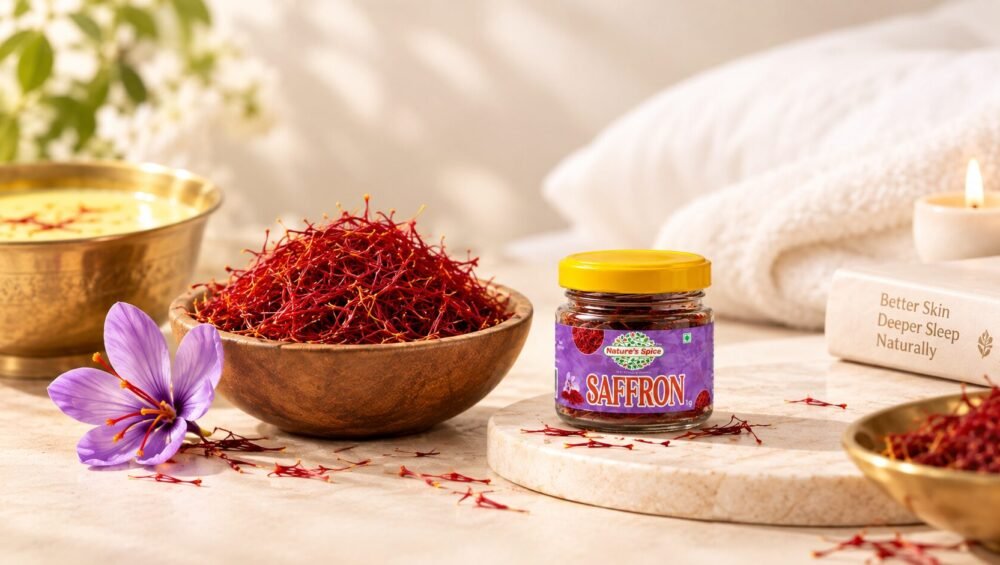
Every one of the saffron benefits in this guide depends on one thing: starting with genuine, unadulterated saffron. → Shop Nature’s Spice Saffron (Kesar) and taste the difference real kesar makes in your milk, your face pack and your wind-down routine.
Why Saffron Milk Is the Perfect Winter Drink: Benefits & Easy Recipe
Related read: Organic Jaggery Bites — The Secret to Enhance Festive Sweets (with Recipes)