
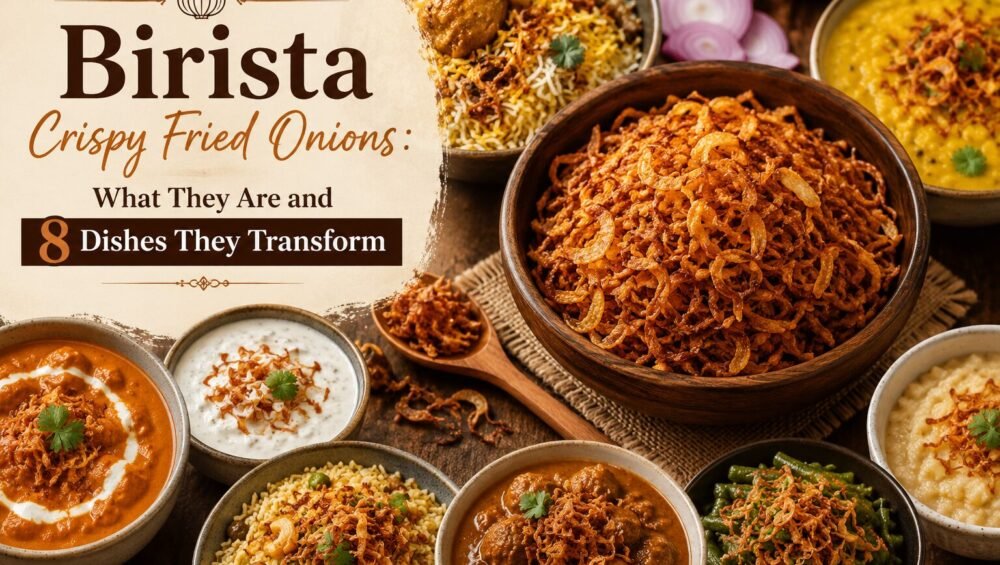
What Is Birista? The Story Behind India’s Favorite Crispy Fried Onions
Open the lid of a good biryani, and the first thing that hits you isn’t the rice or the meat; it’s the smell of golden fried onions.
That distinctive garnish is called birista, and it is one of the most underrated shortcuts in Indian cooking. A small handful turns an everyday dal or pulao into something that tastes like it took hours of effort. If you’ve ever wondered what birista actually is, why cooks swear by it, and where it fits beyond biryani, this guide covers all of it.
Quick Answer
Birista is onion sliced thin and deep fried until deep golden and crisp. It is used as a garnish and flavour base in biryani, dal, pulao, curries, raita and more. Add it right at the end of cooking, never at the start, and store it airtight once fully cooled so it keeps its crunch for weeks.
What Is Birista?
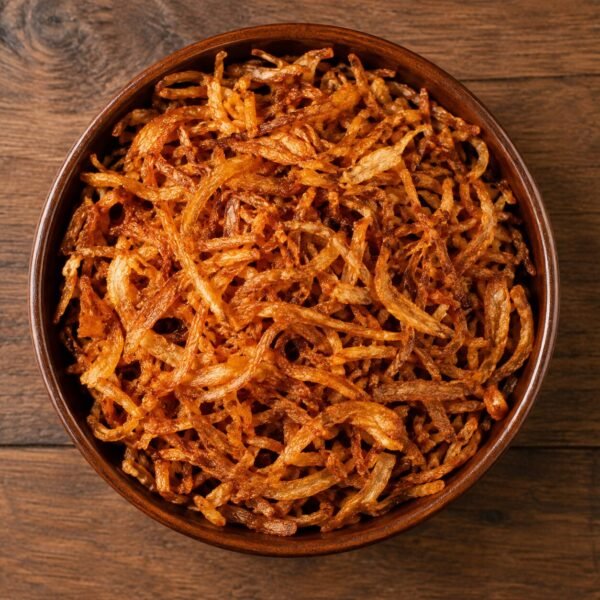
Birista consists of thinly sliced onions that cooks slowly deep-fry until they turn deep golden-brown and crisp. Persian and Mughlai cooks traditionally used birista to build a rich base of flavour in slow-cooked dishes. Unlike raw or lightly sautéed onions, birista cooks long enough for the natural sugars to caramelise fully, creating its deep colour and slightly sweet, nutty flavour instead of a sharp raw bite.
Texture: shatteringly crisp when fresh, never soft or chewy.
Flavour: sweet, caramelised and faintly smoky, with none of the harshness of raw onion.
Colour: a consistent deep golden-brown, not pale and not burnt.
Form: thin, even slices or rings, light enough to crumble between your fingers.
How Birista Is Made
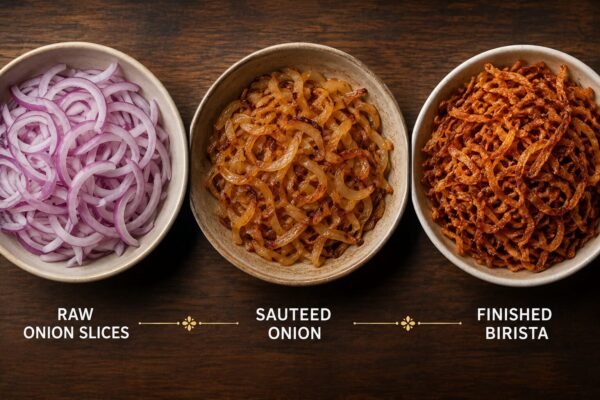
Traditionally, cooks make birista by slicing onions paper-thin, lightly salting them to draw out moisture, and deep-frying them in batches over medium heat. They stir the onions constantly to ensure even browning and prevent the edges from burning. Once the onions turn golden, they drain them immediately and spread them on a tray or paper to crisp as they cool instead of steaming and becoming soft. It sounds simple, but the process is finicky. Slices that are too thick stay chewy, oil that is too hot burns the edges before the centre cooks, and onions left to sit in warm oil for even thirty seconds too long turn bitter. That fine margin for error is exactly why so many home cooks and even professional kitchens prefer to buy birista ready-made rather than fry a fresh batch every time a recipe calls for it.
Why Keep Birista On Hand
Instant Upgrade: a spoonful sprinkled over a finished dish adds crunch, colour and a savoury-sweet depth that takes a recipe from home-style to restaurant-style in seconds.
Time-Saver: frying onions properly takes patience and constant attention. Ready-made birista skips 20 to 30 minutes of standing over hot oil, especially useful on a weeknight or when cooking for guests.
Consistent Result: getting evenly golden, crisp onions at home takes practice. A good packaged birista gives you the same reliable colour and crunch every single time.
Long Shelf Life: properly fried and packed birista stays crisp for weeks when stored right, so you always have a garnish ready without last-minute prep.
Less Oil, Less Mess: deep frying a small batch of onions at home usually means heating and disposing of far more oil than the recipe needs. Buying birista ready-made avoids that entirely.
The Golden Rule of Using Birista
Add birista at the very end, never at the start of cooking. Its whole appeal is the crunch and caramelised flavour, both of which disappear within minutes if it sits in a hot, moist gravy or under a lid of steam. Stir most of it in just before serving, and save a small handful to scatter on top as garnish.
Birista vs Regular Fried Onions
The two terms get used loosely, but there is a real difference. When you sauté onions for a few minutes in a curry base, you soften and lightly brown them, keeping some bite and moisture. Birista goes much further than that.
Cook time: You fry birista for much longer, until it loses almost all its moisture, whereas sautéing takes just a few minutes.
Texture: Sautéed onion stays soft, but frying dehydrates birista completely, giving it a crisp texture closer to a chip than a cooked vegetable.
Purpose: Sautéed onion builds a gravy from the inside, while you add birista afterwards, purely for garnish, crunch and a final layer of flavour.
Shelf life: You have to use sautéed onion the same day, but if you fry and store birista properly, it keeps for weeks.
8 Dishes Birista Transforms
Birista is best known as a biryani ingredient, but its use goes far beyond that one dish. Here are eight places where a spoonful makes a noticeable difference.
1. Biryani
This is birista’s signature role. Layered between the rice and meat or vegetables before dum cooking, it softens slightly and releases its caramelised sweetness through every layer. The portion reserved for the top is what gives biryani its classic golden crunch on serving.
2. Dal
A tempering of ghee and cumin is standard, but you can make your dal tadka even more delicious by topping it with a spoonful of crispy birista. It adds a satisfying crunch and a mellow sweetness that balances the lentils’ earthy flavour.
3. Pulao and Fried Rice
Stir a handful of birista through pulao just before serving, or use it as the final garnish on jeera rice or vegetable fried rice. It delivers the same lift biryani gets, without the layering and dum-cooking effort.
4. Rich Curries and Gravies (Korma, Kadai, Handi)
Many North Indian and Mughlai gravies use fried onion as a base for body and colour. Crushed birista blended straight into the gravy, or whole pieces stirred in near the end, deepens the flavour without the long frying step most recipes call for.
5. Raita and Yogurt Dips
A topping of crushed birista over plain or vegetable raita adds crunch and a savoury note that cuts through the coolness of the yogurt. It works especially well alongside spicy biryani or pulao, where raita is already doing the cooling.
6. Sandwiches, Wraps and Rolls
A layer of birista inside a kathi roll, a grilled sandwich, or a wrap does what caramelised onions do in a burger, adding sweetness and crunch. The advantage here is speed, since there is no pan or extra cooking time needed.
7. Khichdi
Plain khichdi is comforting but mild on its own. A spoonful of ghee and a scattering of birista on top turns it into something worth looking forward to, especially on a day when nothing elaborate is on the menu.
8. Salads and Bowls
Use birista the way fried shallots are used in Southeast Asian cooking, scattered over a grain bowl, a salad, or roasted vegetables. It stands in for croutons or nuts, adding crunch and savoury depth instead of sweetness.

Common Mistakes to Avoid
Adding it too early: birista stirred in at the start of cooking loses its crunch within minutes and turns chewy instead of crisp.
Storing it warm: sealing birista while still warm traps steam inside the container, which softens the whole batch overnight.
Slicing too thick: thick slices fry unevenly, staying soft in the centre while the edges darken too fast.
Skipping the drain step: birista left sitting in oil after frying keeps absorbing it, which makes the final texture greasy instead of light and crisp.
Buying inconsistent batches: colour and crunch vary a lot between brands. A reliably golden, evenly fried batch matters more than it seems until you compare a good one to a poor one.
How to Use Birista
- Add it towards the very end of cooking or as a finishing garnish, never at the start.
- Crush a portion between your fingers for dishes like dal or raita, and keep some whole for texture on top.
- Warm it very briefly in a dry pan for a few seconds if it has softened, to bring back some crunch before serving.
- Avoid covering a dish with a lid right after adding birista, as trapped steam will soften it quickly.
- Keep a small bowl next to the stove while cooking biryani or pulao so it’s easy to layer in stages.
How to Store Birista for Maximum Crunch
The biggest enemy of birista is moisture. Once it cools completely after frying, store it in an airtight container or a sealed pack, away from steam, humidity and direct sunlight.
Never add it to a container while it is still warm, since trapped heat creates condensation that turns crisp onions limp within hours. Kept airtight in a cool, dry place, good quality birista holds its crunch for several weeks. That’s exactly why many cooks prefer buying it pre-fried and sealed rather than making small batches that go soft before they use them up.
Frequently Asked Questions
Q1. Is birista the same as fried onions?
Yes, birista is the traditional Indian and Mughlai term for thinly sliced onions that are being cooked deep-fried until golden and crisp. The term specifically refers to the caramelised, crunchy version rather than lightly sautéed onions.
Q2. Can birista be used in vegetarian and vegan cooking?
Yes. Birista consists simply of fried onions, so you can easily use it in vegetarian and vegan dishes such as dal, khichdi, pulao, and vegetable curries.
Q3. Why does my homemade birista turn soft quickly?
This usually happens when the onions are cut too thick, fried at too low a temperature, or stored while still warm. Thin, even slices fried at a steady medium-high heat and cooled fully before storing give the best, longest-lasting crunch.
Q4. How much birista should I use in biryani?
A general guide is about two to three tablespoons per layer for a home-sized pot of biryani, with an extra handful reserved for the top garnish. This can be adjusted to taste.
Q5. Can birista replace fried onion paste in gravies?
Yes. Crushed or blended birista works well as a shortcut for the fried onion paste used in kormas and rich gravies, and saves the step of frying fresh onions for the base.
Bring Birista Into Your Kitchen
A good batch of birista does the work that thirty minutes at the stove usually takes, without any of the standing, stirring or oil clean-up. Keep a pack on hand and it becomes one of those ingredients you reach for constantly, in a Sunday biryani, a weekday dal, or a quick bowl of khichdi.
→ Shop Nature’s Spice Crispy Fried Onions (Birista)
→ Pair it with our Biryani Masala for a complete flavour base
→ Explore our Ginger Garlic Paste to round out your curry prep