Jaggery Powder: Your Everyday Swap for Refined White Sugar
Jaggery powder is one of the simplest ways to cut back on refined white sugar without giving up sweetness in your tea, festive sweets, or everyday baking. It is made from sugarcane juice that is boiled down, cooled, and ground into a fine, free-flowing powder. Because it skips the heavy bleaching and refining white sugar undergoes, it keeps a warm, caramel-like flavour and small amounts of the minerals found in cane juice.
For many Indian kitchens, this is nothing new. Gur has sweetened chai, ladoos, and halwa for generations. What jaggery powder changes is convenience. There is no chopping, grating, or melting a hard block. You measure it with a spoon, just like sugar, and it dissolves quickly in hot milk, batters, and syrups.
This guide explains what jaggery powder is, how it compares with sugar, how to swap it into your cooking, and ten recipes to start with, including five sweets for Navratri fasting. We will also be honest about what it can and cannot do, because jaggery is still a sugar and should be treated that way.
What Is Jaggery Powder?
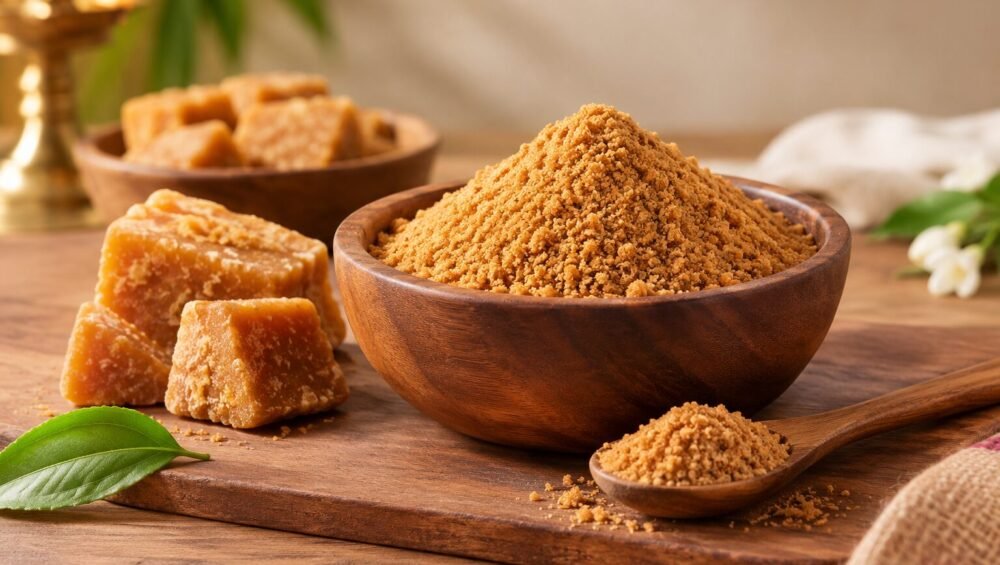
Jaggery powder, also called gur powder or shakkar, is unrefined cane sugar in a granulated form. Fresh sugarcane juice is pressed, filtered, and simmered in large pans until it thickens. Instead of being poured into moulds to make a block, the concentrated syrup is dried and ground to a fine powder.
The result is golden-brown to deep amber in colour, with a rich, slightly smoky sweetness that white sugar simply does not have. Organic jaggery powder is made from sugarcane grown without synthetic pesticides or fertilisers, and processed without chemical clarifiers, which is why many home cooks prefer it for everyday use.
Jaggery Powder vs Sugar: What Is the Real Difference?
Both come from sugarcane, so the comparison is about processing and what is left behind. Here is how the two differ in practice.
Processing: White sugar is refined, bleached, and stripped of molasses until only pure sucrose remains. Jaggery powder is boiled and dried with the cane juice solids still in it, so it stays closer to its natural form.
Flavour: White sugar tastes sweet and nothing else. Jaggery powder brings notes of caramel, toffee, and a mild earthiness, which is why it suits tea, wheat-based sweets, and anything with spices.
Trace minerals: Because the cane juice solids are not removed, jaggery powder retains small amounts of iron, magnesium, and potassium. The amounts are modest, so it should not be treated as a mineral supplement, but it is more than refined sugar offers, which is none.
Blood sugar: This is where honesty matters. Jaggery is still mostly sucrose, and it still raises blood sugar. It is not a sugar-free or diabetic-friendly food. If you manage blood sugar, speak to your doctor before changing your sweetener.
Texture and moisture: Jaggery powder is slightly more moist and can form soft lumps if stored badly. It also adds colour to whatever you cook, so pale desserts will turn golden-brown.
Benefits of Using Jaggery Powder
Here is what jaggery powder genuinely offers when you use it in place of refined sugar.
Less refined: It goes through fewer processing steps, so you get a sweetener closer to the original cane juice.
Deeper flavour: The caramel notes mean you often feel satisfied with a little less. A spoonful in chai tastes richer than a spoonful of white sugar.
Traces of minerals: Small amounts of iron, magnesium, and potassium come along with the sweetness.
Easy to measure and dissolve: Unlike jaggery blocks, the powder needs no grating. It melts into hot liquids and blends evenly into doughs and batters.
Traditional pairing with warming foods: Jaggery has long been paired with ginger, sesame, and cardamom in Indian winter cooking, and the flavours work naturally together.
Golden Rule: Swap jaggery powder for sugar 1:1 by measure, and use it in the same moderate amounts. It is a better-quality sweetener, not a licence to eat more of it.
How to Use Jaggery Powder Instead of Sugar
The swap is simple, but a few habits will give you better results.
- Start with a 1:1 swap. Replace each spoon or cup of sugar with the same amount of jaggery powder. Taste, then adjust. Many people find they want slightly less.
- Add it at the right moment. In tea and milk-based drinks, stir jaggery powder in after you take the pan off the heat and let it cool for a minute. This prevents the milk from splitting.
- Dissolve it first in baking. Mix the powder with the wet ingredients, such as oil, eggs, or milk, so it dissolves fully before the flour goes in.
- Expect a darker colour. Cakes, cookies, and kheer will come out golden-brown. This is normal and part of the appeal.
- Sieve if you see lumps. Natural moisture can cause small clumps. A quick pass through a sieve gives you a smooth, even mix.
5 Easy Jaggery Powder Recipes
These are some of the best ways to use jaggery powder at home, from a daily cup of tea to festive sweets for guests.
1. Jaggery Tea (Gur Wali Chai)
Ingredients: 1 cup water, 1/2 cup milk, 1 teaspoon tea leaves, 1 to 2 teaspoons jaggery powder, a small piece of crushed ginger.
Method: Boil the water with ginger and tea leaves for two minutes. Add the milk and bring it to a gentle simmer. Turn off the heat, wait about a minute, then stir in the jaggery powder. Strain and serve. Adding it off the heat keeps the tea smooth.
2. Besan Ladoo
Ingredients: 1 cup besan (gram flour), 1/3 cup ghee, 1/2 cup jaggery powder, 1/2 teaspoon cardamom powder, chopped almonds or cashews.
Method: Roast the besan in ghee on low heat for 10 to 12 minutes until it smells nutty and turns light golden. Remove from the heat and let it cool for 5 minutes. Mix in the jaggery powder, cardamom, and nuts. While it is still warm, shape into small ladoos. Because the mixture is slightly cooled, the jaggery blends in without turning sticky.
3. Jaggery Sooji Halwa
Ingredients: 1/2 cup sooji (semolina), 1/4 cup ghee, 1/2 cup jaggery powder, 1.5 cups hot water, a pinch of cardamom, raisins.
Method: Roast the sooji in ghee until fragrant. Dissolve the jaggery powder in the hot water. Slowly pour it into the sooji, stirring constantly so it doesn’t form lumps. Cook for 3 to 4 minutes until thick, then add cardamom and raisins. Serve warm.
4. Jaggery Banana Bread
Ingredients: 3 ripe bananas, 1/2 cup jaggery powder, 1/3 cup oil, 2 eggs, 1.5 cups whole wheat flour, 1 teaspoon baking powder, 1/2 teaspoon cinnamon.
Method: Mash the bananas and whisk them with jaggery powder, oil, and eggs until the powder dissolves. Fold in the flour, baking powder, and cinnamon. Pour into a greased loaf tin and bake at 175°C for 40 to 45 minutes. The jaggery gives the crumb a deep caramel note.
5. Jaggery Rice Kheer
Ingredients: 1/4 cup rice, 1 litre milk, 1/3 cup jaggery powder, 1/2 teaspoon cardamom, saffron strands, chopped nuts.
Method: Simmer the rice in milk until completely soft and creamy. Turn off the heat and let the kheer cool for 5 to 7 minutes. Stir in the jaggery powder, cardamom, and saffron. Adding jaggery to boiling milk can cause it to curdle, so this cooling step matters.
Navratri Recipes With Jaggery Powder
During Navratri fasting, many families avoid regular wheat, rice, and refined white sugar, and cook with vrat-friendly ingredients such as singhara atta, rajgira, makhana, sabudana, and sweet potato. Jaggery powder fits naturally into this kind of cooking, and it is widely used in fasting sweets. Customs differ from one family and region to another, so follow your own tradition on what is allowed. If a recipe needs salt, use sendha namak.
1. Singhare Ke Atta Ka Halwa
Ingredients: 1/2 cup singhara (water chestnut) flour, 1/3 cup ghee, 1/2 cup jaggery powder, 1.5 cups warm water, 1/2 teaspoon cardamom powder, chopped almonds.
Method: Roast the singhara flour in ghee on low heat for 8 to 10 minutes until golden and fragrant. Dissolve the jaggery powder in the warm water. Pour it in slowly while stirring so no lumps form. Cook for 3 to 4 minutes until thick and glossy, then add the cardamom and almonds. Serve warm.
2. Makhana Kheer
Ingredients: 1 cup makhana (fox nuts), 1 teaspoon ghee, 1 litre full-fat milk, 1/3 cup jaggery powder, 1/2 teaspoon cardamom powder, chopped nuts.
Method: Roast the makhana in ghee on low heat until crisp, then crush half of it coarsely. Simmer the milk, add all the makhana, and cook for 15 to 20 minutes until the kheer thickens and the makhana turns soft. Turn off the heat and let it cool for 5 to 7 minutes before stirring in the jaggery powder and cardamom. This keeps the milk smooth. Garnish with nuts.
3. Rajgira Ladoo
Ingredients: 1/2 cup rajgira (amaranth) seeds, which pop to about 2 cups, 1/2 cup jaggery powder, 1/4 cup water, 1 teaspoon ghee, 1/2 teaspoon cardamom powder.
Method: Heat a dry, wide pan and pop the rajgira one tablespoon at a time, shaking the pan until the seeds puff up. Set the popped rajgira aside. Melt the jaggery powder with the water and ghee on low heat and simmer for 3 to 4 minutes until slightly sticky. Mix this syrup into the popped rajgira with the cardamom, then shape into ladoos while warm using greased palms.
4. Sabudana Kheer
Ingredients: 1/4 cup sabudana (tapioca pearls), soaked for 3 to 4 hours and drained, 1 litre milk, 1/3 cup jaggery powder, 1/2 teaspoon cardamom powder, a few saffron strands.
Method: Bring the milk to a simmer, add the soaked sabudana, and cook for 12 to 15 minutes, stirring often, until the pearls turn translucent and soft. Switch off the heat and let it cool for 5 to 7 minutes. Stir in the jaggery powder, cardamom, and saffron. The kheer thickens further as it rests.
5. Shakarkandi (Sweet Potato) Halwa
Ingredients: 2 medium sweet potatoes, boiled and mashed (about 2 cups), 3 tablespoons ghee, 1/3 cup jaggery powder, 1/2 cup milk, 1/2 teaspoon cardamom powder, chopped nuts.
Method: Heat the ghee and sauté the mashed sweet potato for 4 to 5 minutes. Add the milk and cook until it is absorbed. Stir in the jaggery powder and keep cooking for 3 to 4 minutes until the halwa turns glossy and leaves the sides of the pan. Add the cardamom and nuts. Sweet potato is naturally sweet, so start with a little less jaggery powder and adjust to taste.
How to Choose and Store Jaggery Powder
A few simple checks help you buy well and keep it fresh.
Look for a clean ingredient list. Good jaggery powder should contain only cane jaggery. Avoid products with added colour, sugar, or anti-caking chemicals.
Check the colour. Natural jaggery powder ranges from golden to dark brown. An unusually bright yellow can signal chemical processing.
Choose organic when you can. Organic certification means the cane was grown without synthetic pesticides, and that matters when the sweetener is the main ingredient.
Store it airtight. Keep jaggery powder in a dry, sealed jar away from steam and sunlight. In humid months, especially during the monsoon, add a clean, dry spoon each time and never use a wet one.
Who Should Be Careful With Jaggery Powder?
Jaggery powder is a better choice than refined sugar for most people, but it is not for everyone in unlimited amounts. People managing diabetes or blood sugar should talk to their doctor before using it regularly. Anyone watching their calorie intake should remember that it has roughly the same calories as sugar. For everyone else, a spoonful or two in tea or a home-made sweet is a sensible, traditional way to enjoy it.
Frequently Asked Questions
Q1. Is jaggery powder healthier than sugar?
It is less refined and retains small amounts of minerals, so it is generally considered a better option. However, it is still a sugar and should be eaten in moderation.
Q2. Can I replace sugar with jaggery powder 1:1?
Yes. A 1:1 swap works for most tea, sweets, and baking. Taste and adjust, as jaggery powder can taste slightly stronger.
Q3. Why does my milk curdle when I add jaggery powder?
Jaggery is slightly acidic, and adding it to very hot milk can cause it to split. Take the pan off the heat and let it cool for a minute or two before stirring it in.
Q4. What is the difference between jaggery powder and jaggery cubes?
They are the same product in different forms. Jaggery Powder dissolves faster and is easier to measure, while cubes suit people who prefer to melt or crush their own. Both work well in traditional recipes.
Q5. How long does jaggery powder last?
Stored in an airtight container in a cool, dry place, it stays good for several months. Moisture is the main enemy, so keep it sealed.
Q6. Is jaggery powder safe for diabetics?
Not as a free substitute. It raises blood sugar like other sugars, so anyone with diabetes should check with their doctor first.
Q7. Can I use jaggery powder during Navratri fasting?
Jaggery is commonly used to sweeten vrat sweets such as halwa, kheer, and ladoo in place of refined sugar. Traditions vary by family and region, so follow what your household observes.
Q8. Can I use jaggery powder in coffee?
Yes. Its caramel flavour pairs well with coffee. Stir it in after the coffee has cooled slightly if you are adding milk.
Final Thoughts
Jaggery powder will not turn dessert into a health food, but it is a simple, honest upgrade over refined white sugar. You get a richer flavour, a less processed sweetener, and a convenient powder that works in everything from chai to banana bread. Start with a 1:1 swap in the recipes you already make, add it off the heat to milk, and adjust to taste.
Ready to try it in your own kitchen? → Shop Organic Jaggery Powder
You May Also Like
→ freshly ground cardamom for kheer, halwa, and chai
Organic Cardamom Benefits (Elaichi): Why It’s the Must-Have Spice in Every Raksha Bandhan Sweet
→ or a warming jaggery and ginger tea